Madinah
If you mention Madinah to somebody, anybody who has been here before, you will see the spirit of this city glow in their eyes.
Throughout my months in Saudi Arabia, I’ve found that people speak of Madinah as if they were recounting their childhood; furrowed eyebrows, subtly clung to the obligations of daily life, unfurl and lighten as they tell stories of their times here. Being here, now, I cannot help but understand. This city flutters with peace and glimmers in the eyes of the people here, who seemingly have nowhere to be; for they are always found where they belong. History’s footsteps echo in the city streets, its spirit hanging softly over you wherever you go.
I spend my hours here eating good food, lazing amongst stray cats, waiting for the beating heat of the day to pass into dusk. Now, as I write from outside the Mosque of Uhud, a dozen calls to prayer echo throughout the city. I keen my ears to the closest and hear the sweet notes trill over the static speaker tone. It pulses outward, dancing through the houses, braiding itself with the song of a neighbouring mosque, skipping over and under; rippling affirmations of gods oneness and compassion running over the rooftops of Madinah. I watch from afar as people bustle between date palms and merchant stalls; heading to pray ishaa like thirsty lambs flocking to water.
Masjid Al-Fash
The smell of oud hangs in the air as a man approaches and offers me water. A beating hum of agreement spills through the crowd in response to the Imam, who begins to lead prayer.
Hands to ears; listening. The congregation quietens, but I can’t help hear the sound of a determined child climb his father, whose attention hangs fixed on the carpet in front of him. At the end of the first Surah, we bow in unison. I stare at the centre of the fractal in the turquoise rug in front of me, my shoulders brushing against another’s while whispers of prayer pitter with cat feet through the hall. The crowd rises, then kneels, placing their forehead to the carpet now, met by the smell of a hundred prayers.
I’m surrounded by an ocean of men with shawls of red and white, brown and green: kufis and pakols, turbans and fezes. Some men cross their hands over chest when they pray, others rest their hands on their thighs; men of a hundred cultures becoming one in congregation.
Masjid-e-Nabawi
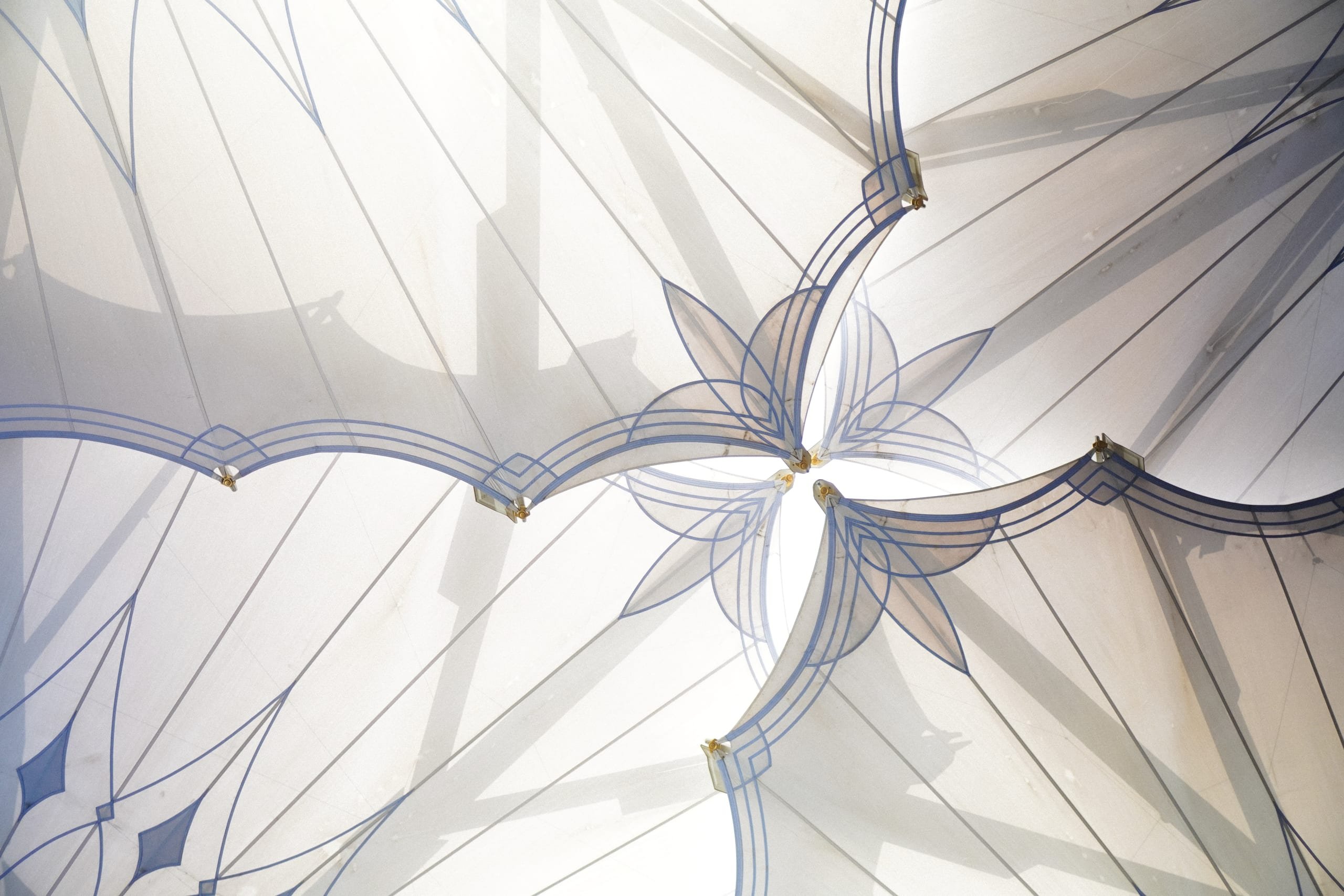
Inside; column after column, ornate carvings across pillars and roof tiles, extending as far as you can see. Gold engravings and lanterns swaying overhead, glowing like moons amongst a jewelled sky, each pattern promising infinity. Green carpets stretching endlessly. Men laying to rest, children flicking through pages of the Quran with fingers wet from zamzam water. Rose scent drifting through the air. Marble shine, footsteps amongst light chatter, but you could swear it was silent - a murmur swimming through vibrating silence. Between these walls the garden of heaven.
An old man, frail, skin hanging thin and loose over bones that I can only imagine must ache, sat with a found smile, tears spilling down wrinkled freckles of a leathery face. Two brothers lean against each other, trapped in endless conversation. Another, like a statue, forehead pressed against the soft green carpet, refusing to rise from sujud.
Ghar Uhud
Uhud cave, or Ghar Uhud, is where the Prophet Muhammad is said to have taken refuge during the battle of Uhud, and where I find myself as I write. I climb the mountainside to reach the cave - concreted over now since hundreds of visitors, keen to claim of their own crumb of heaven, dig up the ground to carry home a handful of dust that carries the promise of blessing. An Arab man, draped in green, still carrying his phone after presenting this miracle to his family over a whatsapp call, beckons me to rub a crack in the stone and smell. It smells of oud - woody, sweet and ashy. It smells good; I can only call it familiar.
The cracks and folds of the mountain face break into words etched by the thousands of visitors who have come through here. Words of prayer, names, wishes, blessings on passed loved ones. I watch the man before me on all fours, crawling under, seemingly resolved in that fitting himself into this cramped space will bring him close to the one who sat here 1,400 years before him. His son, a baby, crawls over the withered carpets, following a bug that had caught his attention.
Garden of Sulman al-Farsi
The first Persian muslim, Sulman al-farsi, was freed from slavery to join the Prophet Muhammad in exchange for 200 date palms: 199 planted by hand by the Prophet himself, and the final planted by Sulman. According to the story, these date palms flowered and fruited within the year; an impossibility, a miracle, after having been blessed by the Prophet.
It smells sweet here, and from where I sit I can hear the clamour of flowing water from the well surrounded by merchant stalls selling transformers figurines and toy puppies. Two men smoke cigarettes on a half torn leather sofa that has somehow found its way between the date palms, only a few metres from an older fellow who digs at the dirt, upturning the soil piece by piece. He had quite a bit to go when I saw him, but he didn't seem rushed. In an hour he will leave the shovel behind and join the rest to pray.