A week before my flight back home, the SD card I had been using could bare no more photos and finally pushed me to buy the hard drive I had been putting off for months. Under the noon heat, I scuttled to the university IT store where I purchased one and headed back, only to find that I needed an adapter which would cost more money I didn’t have. Again, I found myself back inside the IT store, whereupon the shopkeeper kissed his teeth, smiled, beckoned me over to sit down and use his own rather than purchasing one unnecessarily.
For the next forty minutes I sat and waited for my photos to upload with this kind man’s help, as we relayed our experiences in this country.
Omar’s deep set, light eyes sat under heavy brows - he carried a beauty that was unmistakably Palestinian. He looked at me with plump freckled cheeks and the same warm smile you find in anybody you approach for help across Arabia.
He told me about his family; about not having heard from his father’s family since the October 7th, his wife’s family having been halved in a single building strike, destroyed while her uncle had left to find food from an aid station for his pregnant wife. Omar sipped at the coffee he had made for us to share. I had few words to offer him, which he must have known, for he smiled, and with a reassuring tone told me there are a thousand more stories like this one. He turned around to his friend and broke my taught silence with light conversation in Arabic, breathing out a chuckle, and returning to my laptop where the photos had been uploaded. It was the lightness he carried himself with that struck me, that throughout all the pain he could carry, he was happy, being kind to strangers, laughing over spilt coffee and living the life that faced him each morning.
I collected my things, gave my thanks, and left the store to the campus courtyard to swallow Omar’s story. Now less occupied with the heat, I twiddled my tasbih between my forefinger and thumb while sat on the ledge of the fountain outside the university library.
A few metres in front of me, pacing with the cadence one carries when they have somewhere to be, I watched as a man, kufi on his head, shawl around his neck, wearing sandals and shalwar kameez, made his way toward the campus mosque for asr prayer with a tasbih in one hand and a starbucks matcha latte in the other. The same starbucks riddled with controversies around Gaza, sipped in the same breath as this man’s dhikr.
Dhikr - an Islamic devotional act where one repeatedly recites phrases or prayers to remember God
With this, I understood that it is somewhere in the absurdity of this scene that Saudi finds itself today. That uncomfortable place between the growing consumerist appetite of the people, the rush to globalise, and the weight and poise of the religion that sifted itself from the desert sand here. What is to become of the depth of tradition that Saudi Arabia rests on top of, I ask myself. What will be recognisable in Jeddah, Riyadh, Madinah, ten years from now?
My taste of Saudi Arabia was epitomised by my local grocery store; having advertised itself as selling products from all over the world, a store which, upon entering, seemed like a dream in an American suburb, shining with every conceivable snack from east and west, but, when inspected closer, the bread would reveal itself stale, pomegranates plastic and decorative, the GMO dates dusted with aspartame.
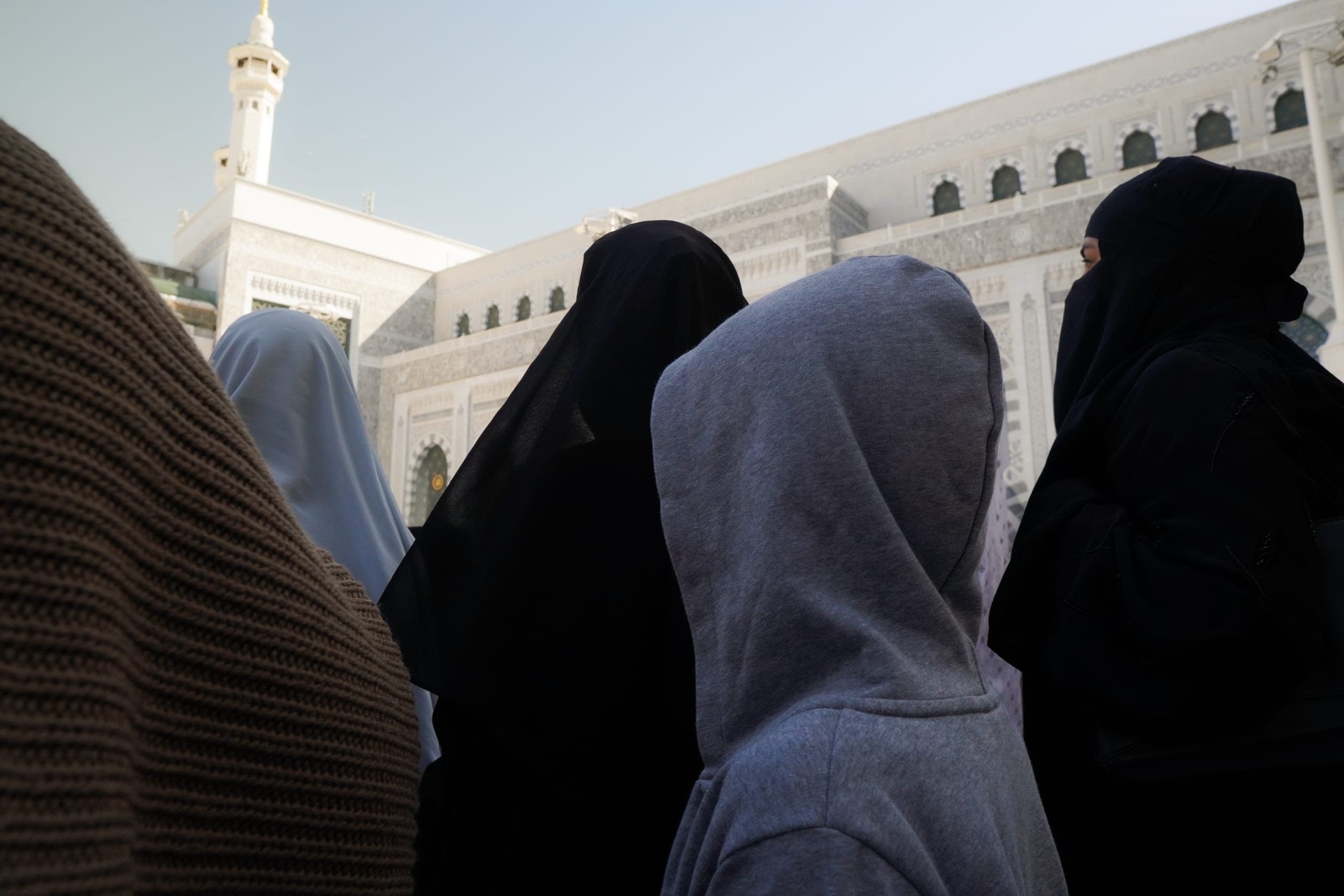
Saudi had been kind to me, but the colourful, enticing culture that Muhammad Asad spoke of in The Road to Mecca could now only be found hiding in alleys, peaking behind a distant wall, twinkling gently in the eye of a local, or hung in the air of a mosque. By no means was it missing, by no means has the country lost its essence in its entirety - rather; it has been stifled, buried under concrete shopping malls, nailed behind LED starbucks logos, driven tired by labubus, louis vuitton bags, luxury hotels and towering apartment buildings.