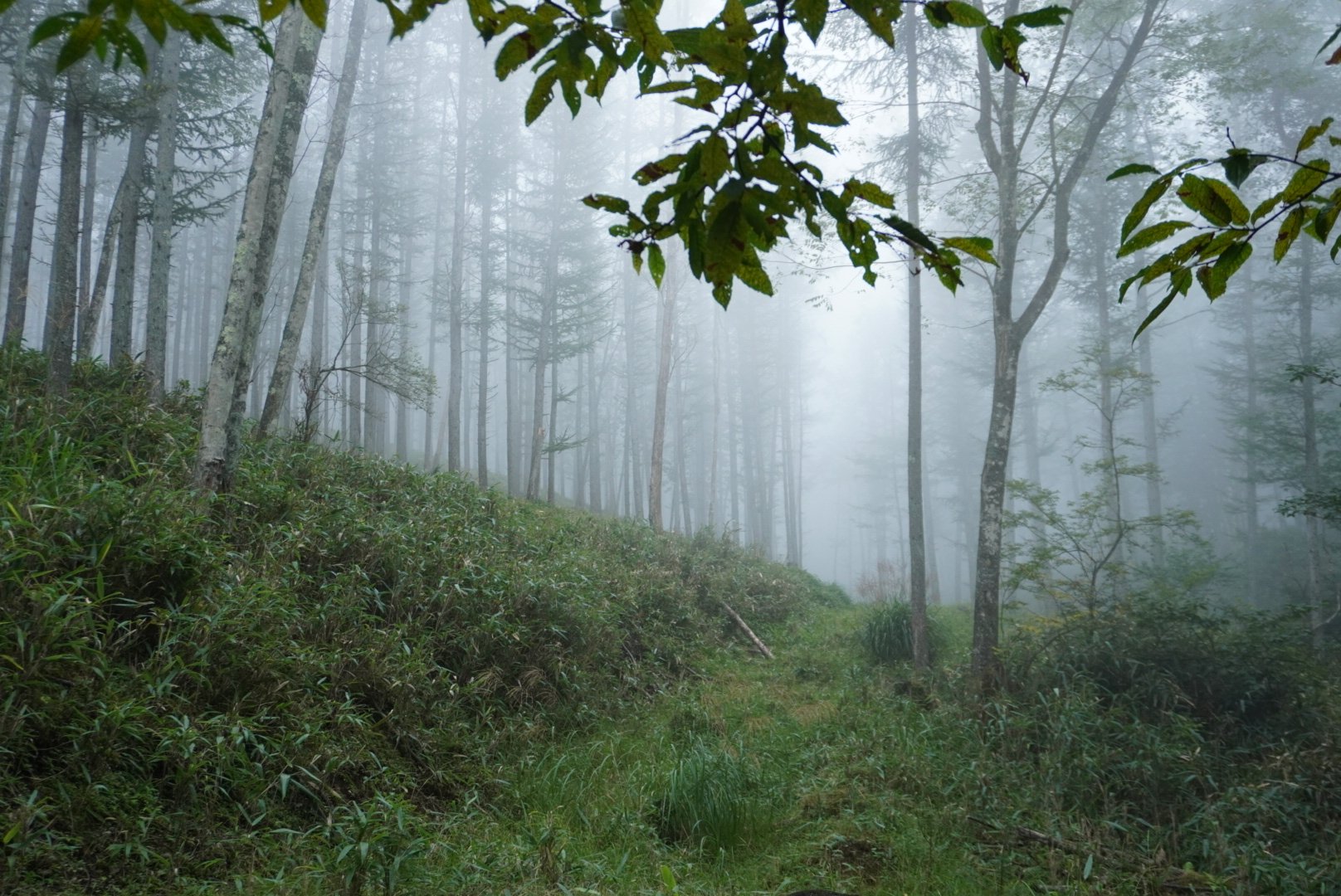
The mornings stir a thick fog, descending from the mountains onto the jungle. Dawn sunlight pours through the fractures of the canopy – it is a cool morning. The chatter of crickets has quieted down, and is gently replaced by the flutter of wings and occasional birdsong.
A nomad, a hunter. The lands she roams is different from that which her parents ruled, and more still from the land of their parents before that. The local grasses have been evicted by shrubs and dense thickets of foreign flowers. Native trees sit peppered about the valley, outnumbered by the bustle of alien ferns. However different, this Bengal tiger makes-do; she lives, hunts, and will one day bear cubs in these forests.
This is Wayanad: a small district in the state of Kerala lying on the south-western coast of India. Wayanad is situated high in Western Ghats – an extensive mountain range older than the Himalayas, born when the supercontinent Gondwana broke up more than 100 million years ago. The tallest peaks here reach around 2000m in height, and the majority of the land is populated by dense jungle. These jungles are rich in their biodiversity, and are a hotspot for the Bengal Tiger population in India.
My arrival to Wayanad was at a turbulent time. I began writing this on the 16th of December, sat in a small office beside a newspaper. The paper was written in Malayalam, a local language that I have no understanding of. What I did understand, however, was the bright orange border of the front page with the roaring, fanged face of a tiger plastered above the heading. Just the week before, a farmer collecting grass for his cattle in the village of Vakeri had been attacked and eaten by a tiger.
That morning a short column was published in the local newspaper reporting the incident. Since then, that column seemed to have grown into this flagrantly decorated page, describing the day-by-day outplay of a hunt that aimed to capture the culprit. Atop the page, a mugshot-esque camera trap image of the tiger sat plastered below a red title exclaiming ‘MAN-EATER’ in Malayalam.
Incidents like this are becoming increasingly common, and in speaking to the locals I have gained an understanding of the anxious relationship between the residents of Wayanad and the native tigers. A relationship that is far from ameliorated by newspapers like this one.
Life for the residents of Wayanad is underscored by these cases. The larger towns like Kalpetta, where I stayed, see little of this conflict. They are bustling and lively – tangled in busy roads and lined with hundreds of stores selling everything from industrial aluminium to wedding dresses. The food is spicy, the weather is forgivingly warm and it rains from time to time. Nevertheless, the equivalent of our pigeons are macaques, and the closest to our squirrels is a mongoose. The jungle never fails to remind you where you are. Mango and Jackfruit trees offer their fruits to the townsfolk, and every so often you’ll find a boy opening a coconut they’ve plucked off a tree.
Take a bus out of Kalpetta, and after a turbulent 10 minute ride you’ll find yourself driving past plantations bordering jungle, dense forests and occasional clusters of homes with storefronts nestled amidst the greenery. It’s these fringe neighbourhoods that see attacks like in Vakeri. The vibrance and peril of the jungle is blended into the normality of life here.
After discovering the news of the attack, I travelled to a nearby village where I spoke to the Regional Chief Forest Officer to learn about the ongoing Tiger conflict. He was deeply knowledgeable, equally warm and welcoming, but through his hospitality I noticed an air of melancholy about him. He was a happy man, but I could sense a fatigue in his eyes as he sat behind the thick layer of paperwork on his desk. Regardless, we spoke, and I learnt much about the conflict between people and tigers here.
“To a tiger, land is to be explored. Prey is to be hunted, lakes to be swam in.”
These tigers keep territories; pockets in their home range that are defended aggressively. Besides these territories they roam free and far, driven by desire and habit – I was told that in the previous years, they had tracked a tiger travelling more than 2000km across India in a month. To a tiger, land is to be explored. Prey is to be hunted, lakes to be swam in. The intruding cackle from the city is an obvious landmark to stay clear of, but fringe towns and villages with their abundance of crops and livestock, their gentle situation beside the jungle, their greenery and quietude are not as obvious to avoid. Moreover, this makes protected areas and nature reserves almost obsolete in controlling this conflict. What good is a guarded patch of jungle to a nomadic animal with a nonchalant regard to borders?
With the arrival of British Imperialists, their range was constricted at the hand of a mind driven by finance and commodity. Introduction of invasive species, replacement of land with monoculture farms, mining and urbanisation. The imperial mind saw utility in the mountains and forests of the Western Ghats, and in the taming of what was ‘savage’ and ‘uncivilised’ the British stood at the forefront of the ‘conquering’ of this corner of India. Land continued to be altered, and the wildlife was extensively hunted in pursuit of the subjugation of the jungle. Today, more than 50% of Wayanad’s forests are dominated by teak tree and eucalyptus plantations. This not only shrinks their habitat, but reduces the amount of prey available to the tigers here. As these animals navigate the changing landscape, the expansion of residential areas only exacerbates the situation.
After the 1990s, Indian governance turned to the protection of wildlife and ecosystems. With the passing of new legislation and the establishment of strict delineated reserves and conserved territories, tiger populations began recovering from their rampant poaching in the previous century. An increasing population of territorial animals requires an increasing amount of land in which to live, as well as a greater numbers of prey. Wayanad in particular is a hotspot for India’s population of tigers – around 90 genetically diverse, healthy individuals populate the hills, and this is only expected to increase. It is this population growth, coupled with the change in the landscape and land use in Kerala that towns like Vakeri become victim to unprecedented occurrences of human-wildlife conflict.
Far more often than humans, livestock are the preferred prey for a tiger. As such, it is not uncommon that cattle, goats or sheep are found half-eaten or that they disappear altogether. This issue is troubling for farmers whose livelihoods depend on their livestock, and is a major dimension of the conflict between people and tigers. The government has schemes to compensate for the loss of livestock which are an important relief to victims, but they do nothing to prevent these issues in the first place.
In this context, it is inevitable that tigers would tread into human territory, and in turn, it is inevitable that there will be incidents like the one earlier this month. With the rise of these instances of conflict, the locals grow more upset, and this upset translates to anger.
The chief told me that it is up to the Forest Office here to capture the tiger, and I then understood what that sadness I sensed in him was. The sadness was mourning – a mourning for what he feared was to come for the tiger. The chief explained to me the pressure that was on the Forestry Department to kill the so-called ‘Man-Eater’.
Blame is a tricky game to play in a situation like this. Immediately after the tragedy, fingers were pointed at the forest office, at the government, and ultimately at the tiger itself. Much of this blame was accentuated by the portrayals of the situation in the media, as with newspapers like the one that brought me to the Chiefs office. Talking to the locals though, I understood that the tension was a symptom of the general difficulty they have been having living beside the jungle.
The residents of Wayanad call for a strict delineation between the community and the forest, and politicians reassure them that this is being planned for. From speaking to the chief, various officers, and conservationists here I have learnt that this is an impossibility. There is no way to successfully prevent the jungle from creeping into the lives of the residents, so what can be done?
There are plenty of minds working to push back against the conflict with tigers. I am careful to not use the word ‘solve’ here, as it has become all to evident to me that this issue is not one that can be wrapped up and tucked away in one fell swoop. These instances of conflict are omnipresent in rural areas, and will continue to be. What can be done is to build a system that can manage and respond to these issues as they arise.
Talks have been ongoing of building a network of camera traps and monitoring systems in populated areas in order to pre-emptively detect and warn communities of nearby tigers. While it could be effective, this is a huge undertaking and undoubtedly ambitious. Moreover, it would only serve to reduce the risk that will always remain for the communities in places like Wayanad. It is for this reason that attention is drawn to the single most powerful and effective tool that conservationists and officers have: perception.
To alter the perception of the residents toward the jungle is the foundation of the work being done in Wayanad. Seniors who work at the forefront of protecting the Western Ghats across all disciplines have expressed to me a sense of how the contemporary generation has lost its intimacy with the natural world here. The forest has become a stranger, an ‘other’ that people must be protected from.
Changing the eyes with which the locals see the forest, encouraging a direct and personal relationship with nature will recapture an understanding that humanity is a sinew in the Gaian web of life. That we are intertwined with the trees and the animals of the forest. This can serve to shift the entire framing of ‘conflict’ so that when tragic incidents like the tiger attack occur, the repercussions are not as aggressively negative as they were in Vakeri. Of course these instances will be painful for residents, but there is comfort in a deeper sense of our place as part of the earth as a whole. An understanding of the inevitability of these issues will push people to accept the reality of measures they should take to lessen these risks, and more importantly will allow residents to pull away from an attitude of retribution so that the tigers themselves can be protected too.
“Changing the eyes with which the locals see the forest, encouraging a direct and personal relationship with nature will recapture an understanding that humanity is a sinew in the Gaian web of life. ”
Groups of people such as those in the Hume Centre of Biodiversity and Wildlife Conservation are doing exactly this. In my time in Wayanad, I have had the privilege of witnessing how the Hume Centre has been organising seminars, planning camps, and teaching children about the nature in Wayanad first-hand. This work is pivotal to cultivating the perception that will lay the foundation to a future of coexistence and understanding.
Reconnection to nature is at the heart of so many issues that pervade the socio-scape of modern life, not just here in India. At the foundation of these issues, some semblance of peace is found in rekindling the awareness of our place in the earth. While our issues at home may not be as drastic as the tiger attacks that happen in Wayanad, the time I spent here instilled in me something priceless. The importance for people to cultivate an intimate relationship with nature in the face of an ever-changing world.